Research Article | | Peer-Reviewed

Renewable and Sustainable Energy Engineering Technologies, Adaptation and Evaluation of Small Scale Portable Wood Powered Bread Baking Oven

Received: 21 November 2025     Accepted: 15 December 2025     Published: 29 December 2025
Views:       Downloads:
Abstract

Bread is a staple food that is closely connected to people's daily lives, and the process of making bread is a significant part of food production. Baking is the last and most critical stage in bread-making, where dough typically made from flour, water, and leavening agents is transformed into a food item with unique taste and texture through the application of heat in an oven. In Ethiopia, most bakers are located in towns and use either traditional wood-fired ovens made from mud bricks or imported modern ovens. These ovens are often criticized for their high wood usage and high cost, making them unsuitable for small-scale or household use. To address this, this study aimed to adapt and assess a small-scale, portable, wood-powered bread-baking oven (WPBBO). The oven, which has two baking compartments with one baking chamber and two combustion chambers, was evaluated based on its baking capacity, efficiency, and the weight loss of the bread produced. When fully loaded, it can bake 160, 32, and 8 loaves of bread in each batch across the two compartments, with a baking efficiency of 86.9% and a baking capacity of 96.6%, along with an average weight loss of 12.6%. The oven's performance in terms of baking time was tested for 100 g, 500 g, and 2000 g loaves of bread, showing an average baking time between 15 - 25 minutes. A single feeding of 5 kg of biomass fuel into each fire chamber was sufficient for a 25-minute baking cycle. The study concluded that the oven performs well within a 15-20 minute range for a standard bread loaf. Based on this evaluation, the wood-powered oven is recommended for use in domestic settings and small-scale businesses, as it is suitable for rural areas where electricity is not available, as well as in pre-urban and urban communities.

Published in International Journal of Food Science and Biotechnology (Volume 10, Issue 4)
DOI 10.11648/j.ijfsb.20251004.13
Page(s) 98-111
Creative Commons

This is an Open Access article, distributed under the terms of the Creative Commons Attribution 4.0 International License (http://creativecommons.org/licenses/by/4.0/), which permits unrestricted use, distribution and reproduction in any medium or format, provided the original work is properly cited.

Copyright

Copyright © The Author(s), 2025. Published by Science Publishing Group

Keywords

Wood Powered Oven, Bread, Bread Baking, Portable Oven

1. Introduction
About 16% of global energy consumption comes from renewable energy sources, out of which biomass has the largest share of 10% . Fuel wood is used for cooking and heating, especially in developing countries of Africa, Asia, and Latin America . A baking oven is the most widely used appliance in the food service industry . The growth and success of any industry depend on the quality of products and energy-efficient processes . According to , baking is a complex process involving simultaneous heat and mass transfer, besides chemical reactions and structural transformations. The study built a finely controlled cavity to measure the physical changes in baking bread and correlate the process variables and bread physical properties throughout the baking process. In their study, they pointed out the temporal evolution of temperature, moisture, weight loss, volume, porosity, crumb structure, and color change. Bread is closely related to people’s daily life, and baking, the bread making, is an important unit operation in the food sector . Baking is the final and most important step that plays an important role in determining the quality of the final product in bread production and can be defined as the process that transforms dough, basically made of flour, water, and leavening agents, into a food with unique sensory features by application of heat inside an oven . These happen as a consequence of heat (radiation, convection, and conduction) and mass transfer (water vapor–air movement in the oven, water evaporation within the product, and sometimes water generation by wood burning). An oven is one of the key pieces of food processing equipment that uses a complex simultaneous heat and mass transfer process in the food industry . It is a thermally insulated chamber used for heating, baking, cooking, or drying of food substances . According to study reports, in a baking oven, the hot air flows over the material either by natural convection or forced by a fan; the convection heat transfer from air; the radiation heat transfer from the oven heating surfaces; and the conduction heat transfer across the contact area between the product and metal surface . Bread production occurs on several different scales, from the artisan bakeries serving the local community to the large commercial bakeries, as well as in-store supermarket bakeries, small chain outlets, and anything in between. Similarly, baking ovens come in a variety of different configurations, from small domestic units to large tunnel ovens . In Ethiopia, until recently, most of the bread-making sectors used traditional bread ovens, usually made of refractory material such as stone, brick, adobe, or refractory concrete, and recently, large numbers of the country’s bakeries are using the imported electric ovens of various scales, mainly in urban parts of the country. The traditional baking ovens usually used large wood logs as firewood and some other locally available combustible materials. Their shortcomings are longer baking time, non-homogeneous heat distribution, and thermal energy losses, which resulted in an increase in the cost of production and, likewise, air pollution . Although the electric baking stoves are known for their improved features, they are limited to the electrified parts of urban areas and cities, which are inaccessible to the majority of the rural dwellers of developing countries, like Ethiopia, where the vast majority live in rural areas without access to electricity. To solve the problems associated with both of the existing baking ovens' conditions, various wood-fired ovens have been developed and tested effectively in other parts of the world. Among them, wood-fired ovens are enclosed ovens made of varying qualities and thicknesses of steel and stainless steel, come in a range of sizes and shapes, and offer various added values, like the ability to fill the chamber and easy loading and unloading. They often have some fuel control and a comfortable working area with/for the operator . In Ethiopia, increasing population, rapid urbanization, and changing food habits have resulted in a preference for ready-to-eat, convenient foods such as bread and other baked products. However, in Ethiopia, the existing baking ovens are mud-made wood-fired or imported electric types, mostly found in cities and towns. Hence, still, the vast majority of the Ethiopian rural dwellers have no access to electricity; thus, the mud-made wood-fired stove can be an option for the vast majority of rural Ethiopia. However, the existing mud-made wood-fired baking oven found in Ethiopia is the oldest massive non-portable model and is energy-intensive, consuming more wood for heating and baking. Therefore, this study was conducted to adapt and evaluate a small-scale wood-powered bread-baking oven suitable for the non-electrified rural areas of the country. The developed oven is a small-scale portable wood-powered bread-baking oven made of mild steel and stainless steel metals that has been evaluated and reported as an effective oven for the intended purpose, as it is made to be a thermally insulated chamber, uses less fuel, is comfortable for operators of both genders, and is used for the baking of bread for domestic, small, and medium-scale bakery purposes, which might help in creating jobs for the users.
2. Materials and Methods
2.1. Materials
Materials and Apparatus Used in This Experiment for Construction and Evaluation Were:
1) Mild steel, stainless steel, round bar, flat irons, square pipes, angle iron, water pipe, bat hinge, stopwatch, digital balance, Digital thermometer, aluminum-reinforced fiberglass, infrared radiation, wheel, shafts, cement, and fine sand.
2) K-type thermocouple probe, oven dry, Hygrometer, Fuel wood, wheat flour, ingredients, and water.
2.2. Experimental Site Description
The experiment was conducted at the Bako Agricultural Engineering Research Center, which is located in the West Shewa Zone of the Oromia National Regional State, Ethiopia. The center lies between 90°04'45" and 90°07'15" N latitudes and 37°02' and 37°07' E longitudes . The test was conducted in Bako (BAERC) with the local atmospheric conditions of ambient temperature 20-30°C, air pressure 75.7 kPa, relative humidity more than 35%, and altitude/elevation 1650 m.
2.3. Design Heat Transfer Calculation
Heat is energy in transit under the motive force of a temperature difference . Heat transfer may be defined as the transmission of energy from one region to another as a result of a temperature gradient . It takes place by the following three modes : (i) Conduction, (ii) Convection, (iii) Radiation. According to , Heat transmission in the majority of real situations occurs as a result of combustion of the modes of heat transfer in a baking, heat transfer from the wood burned to the baking space, and heat conduction through the oven walls , and the study states that heat always flows in the direction of lower temperature.
2.3.1. Conduction
As mentioned by , conduction is the transfer of heat from one part of a substance to another part of the same substance, or from one substance to another in physical contact without appreciable displacement of molecules forming the substance. In solids, the heat is conducted by the following two mechanisms : As confirmed by , heat is conducted by lattice vibration (the faster-moving molecules or atoms in the hottest part of a body transfer heat by imparting some of their energy to adjacent molecules) . As reported , 25] that heat is also conducted by the transfer of free electrons (free electrons provide an energy flux in the direction of decreasing temperature for the major portion of the heat flux except at low temperatures). Heat Emitted by Wood: The heat emitted by wood of a recommended mass of 5.0 kg for each firewood combustion chamber was , 17]. According to study reports on Fourier’s Laws of Heat Conduction, the study confirmed that conduction of heat means heat flow from the hotter end to the colder end, i.e., the conduction of heat from the heat furnace or combustion chamber through the heat element to the baking tray and baking space, and heat conduction through the oven walls. pointed out that the greater the temperature difference, the faster the heat will flow. This is determined using Fourier's law of conduction in a one-dimensional state . Mathematically calculated emitted heat as follows:
Q=Adtdx(1)
Where Q = heat flow through a body per unit time (watt), A = surface area of heat flow (perpendicular to the direction of flow) m², dt = temperature difference of the face of block (homogeneous solid) of thickness dx through which heat flows (°C or °K), and dx = thickness of body in the direction of flow, m.
Thus,Q=Akdtdx(2)
Where K = constant of proportionality, known as the thermal conductivity of aluminum-reinforced fiberglass; body = 0.04 W/m · K (stainless steel 304 = 16.302 W/m · K).
For composite materials: Total heat flow is given by , 17].
Q=dTΣR=T1-T2ΣR(3)
ΣR=1hiA+1hoA+LakaA+LbkbA+Lc/kcA(4)
Where R=resistance to heat flow, Hi and Ho=inner and outer convective heat transfer coefficients, A=cross-sectional area, la, lb, and lc=thickness of materials a, b, and c, and Ka, kb, and kc are the conductive heat transfer coefficients for materials a, b, and c (stainless steel, aluminum-reinforced fiberglass, and steel sheet metal), respectively.
2.3.2. Convection
As stated by , convection is the transfer of energy from one point to another by the motion of a mass of materials between the two different points. Mathematically, it can be expressed as,
Q=hA(Tw-Ta)(5)
Where h is called the heat transfer coefficient, L = coefficient of corrective heat transfer, A = area of surfaces not perpendicular to the direction of heat flow, and 𝑇w− 𝑇a = temperature difference.
2.3.3. Radiation
According to , radiation, an electromagnetic wave such as light and radio waves, is the transfer of heat through space or matter by other means apart from conduction and convection. As pointed out by , it occurs because a hot body emits more heat than it receives and a cold body receives more heat than it emits. also confirmed that it requires no medium for propagation and will pass through a vacuum. All objects can emit and absorb radiation, and radiation carries energy (W). Mathematically, it can be expressed as, Laws of Radiation The Stefan-Boltzmann law states that the emissive power of a black body is proportional to the fourth power of its absolute temperature. i.e., QαT4.
Q=FσAT14-T24=εσA(T14-T24)(6)
Where F = a factor depending on geometry and surface properties, σ = Stefan-Boltzmann constant = 5.67*10⁻⁸ w/m² k⁴, ℇ = emissivity of stainless = 0.074, A = area (m²), T1 and T2 = temperature degree Kelvin (°K) this equation can also be rewritten as
Q=T1-T2T1+T2(7)
2.3.4. Heat Emitted by Wood
The heat emitted by the wood of the recommended mass of 5 kg, 5 kg for each fire chamber, was Qe=5.06 MJ. Mathematically calculated emitted heat as follows .
Qcod=Akdtdx(8)
Where Q = heat flow through a body per unit time (watt), A = surface area of heat flow (perpendicular to the direction of flow) m², dt = temperature difference of the face of block (homogeneous solid) of thickness dx through which heat flows in °C or °K, and dx = thickness of body in the direction of flow in m.
Qcod total=QcondBF+QcondTF(9)
2.3.5. Heat Loss to Baking Space
The heat loss to the baking space was the heat conducted from both fire chambers and the convective and radiated heat that circulated inside the baking chamber, which was found to be 16,281.672 watts.
Qlbs=Qcond+Qconv+Qrad(10)
2.3.6. Heat Loss to the Environment
The heat losses to the environment were the heat conducted via the chimney and doors. It is the uncontrollable heat loss that was emitted to the environment via nature and calculated as follows. It was found to be 4265.31 watts. Thus, Qloss=Qloss via chimney + Qloss via door
Qloss=Qloss via chimney+Qloss via door(11)
2.3.7. Volume of the Baking Chamber
The baking oven chamber is the enclosed chamber where the baking takes place, and the volume was calculated using Eq as described by , 9].
V=BCL*BCW*BCH(12)
Where V is the volume of the baking chamber (mm³), BCL is the baking chamber length, BCW is the baking chamber width, and BCH is the baking chamber height. Therefore, the volume of the baking chamber (V) is equivalent to 0.285 m³, given the values of 1000 mm, 810 mm, and 260 mm for BCL, BCW, and BCH, respectively.
2.3.8. Capacity of the Oven
The capacity of the oven is directly proportional to the number of bread loaves/batch and baking pan dimensions (size of the baking pan and the dough weight) , 5, 8]. The average weight of bread for bread dough of 100 g, 500 g, and 2000 g (small, medium, and large loaves of bread) after baking was 84.133 g, 468.825 g, and 1872.344 g, respectively, as a design basis, having a volume of 2.61410⁻⁴ m³. 2.9210⁻³ m³ and 1.08210⁻² m³, respectively. Whereas, the average bread surface areas for each bread type were 3.04910⁻³ m², 2.84210⁻² m², and 3.3210⁻¹ m², respectively. The surface area occupied by 160, 32, and 8 loaves of bread for each bread weight of 100 g, 500 g, and 2000 g per batch is 0.39 m², 0.03 m², and 0.0628 m², respectively. Two baking compartments are then established as follows: The Surface area of baking bread for each compartment is 0.81 m². The oven has a total area and volume of 0.84 m² and 0.23085 m³, respectively. The vertical height of the baking compartment proposed is 0.285 m. Therefore, the capacity of the oven is 0.23085 m³.
CO=size oftraysize of bread(13)
Therefore, CO for small, medium, and large bread dough weight and size trays were 160, 32, and 8 pieces of bread per batch for 10 kg of flour, which is 16.41 kg of dough, and 320-480, 64-96, and 16-24 pieces of bread per hour for 20-30 kg of flour, which is 32.82-49.23 kg of dough, respectively. It operates two to three times per hour.
2.3.9. Baking Capacity
Baking capacity: the number of pieces of bread dough in each baking compartment depends on the arrangement of the food samples in the baking chamber. The baking capacity of the oven was determined by taking into consideration the size of the baking pan and the dough weight. The wood-powered/fired bread-baking oven has two baking compartments; in each compartment, a total of 160, 32, and 8 pieces of bread dough were baked per batch in baking pans/trays of 985 mm × 390 mm × 60 mm, 300mm × 100mm×100mm, and Ø400 mm × 100 mm for small, medium, and large loaves of bread, respectively. The baking chamber of the fabricated wood-powered/fired bread baking oven (WPBBO) has a volume of 2.61410⁻⁴ m³, 2.9210⁻³ m³, and 1.082*10⁻² m³, respectively, at an average baking time of 20 minutes (15-25 minutes). Therefore, the WPBBO has a maximum baking capacity of 30-50 kg/hr, producing 480, 96, and 24 baked bread pieces per hour for each dough mass of 100g, 500g, and 2000g per batch of operation, respectively.
BC=MDBT(14)
Where BC is the baking capacity, MD is the mass of dough (kg), and BT is the baking time (hr).
2.3.10. Baking Efficiency
The baking efficiency of the oven is calculated as the output energy per input energy of the baking oven , 5, 8]. The baking efficiencies increased relatively with an increase in the baking temperatures. The baking efficiency of the WPBBO was determined by using the ratio of the designed baking time to the actual baking time required to bake a batch of dough to its desired taste, color, and texture in the rotary oven, calculated as
BE=DBTABT(15)
Where, DBT=designed baking time and ABT=actual baking time
Weight loss in the food samples: this is the weight loss encountered during the operation of the oven. The weight loss in the food samples (bread dough) was calculated by subtracting the weight of the food sample after heating from the initial weight of the food sample .
2.3.11. Weight Loss in the Food Samples (Baked Bread)
The weight loss in the food samples (bread dough) was calculated by subtracting the weight of the food sample after baking (heating) from the initial weight of the food sample . The percentage of moisture loss was obtained using the following equation:
Weight loss=Initial weight-(Final weight)(16)
%MC=wi-wfwi*100(17)
The moisture loss in baked bread is minimal. Therefore, the average weight losses or moisture for every three different weights of bread dough of 100 g, 500 g, and 2000 g were 15.867%, 6.24%, and 6.3828%, respectively.
2.3.12. Heat Loss in the Oven
The heat loss from the oven to the environment was estimated as negligible because the WPBBO wall was totally insulated by high thermal insulation material of aluminum-reinforced Fiberglas and assumed an adiabatically insulated boundary condition except via chimney and air ventilation hole provided on fire door, which was of minimal and Natural type and uncontrolled.
2.4. Biomass Fuel Energy Efficiency and Moisture Content
Parameters of the biomass fuel selection for firewood: when woods were alive and fresh, they consisted primarily of water, i.e., most of the weight was actually water. After being cut to length and stacked for a year or two, the average moisture content generally drops to approximately 20% , 27]. In the combustion process, water is evaporated, and the temperature is raised to the fuel gas temperature. Dry wood has approximate combustion values of 16300 kJ/kg and 3890 kcal/kg. For 20% air-dried wood, it has a usable energy of 97% by volume and 81% energy per weight. Accordingly, we have got the combustion value of 17,447.98 watts. The moisture content, ash, and heat values of the four different species of wood were determined by the following equations. However, Eucalyptus grandis wood type was selected, which was more energy efficient than others and long-lasting in firing time with high thermal efficiency.
%MCwb=wi-wfwi*100(18)
%MCdb=wi-wfwf*100(19)
Where, MCwb = Moisture content wet basis, MCdb = Moisture content dry basis, Wi = Initial weight, and Wf = Final weight
2.4.1. Weight Loss During Drying
During drying, paddy wood loses its weight due to loss of moisture:
wf=wi*100-mci100-mcf*100(20)
Where, WI = Initial weight (g) and Wf = Final weight (g)
The moisture content for four different locally available biomasses was found by weighing each sample before and after it was placed in the oven for 72 hours at 65°C. The ash content was determined to obtain their moisture by examining four different wood species in the weight of the samples after combustion in a wood-powered bread oven for 3-4 hr. The densities were based on the volume and weight measurements of the samples. The volume was determined using a known amount of wood used during evaluation. The amount of wood used was determined by weighing the sample individually per replication.
2.4.2. Energy Generated by the Heat Source (Fire Wood)
The energy generated by fuel wood for oven heating is calculated as
Hg=Hp+Hc+Hm(21)
Where Hg = the quantity of heat produced by the wood burned; Hp = the quantity of heat gained by the food product (bread dough); Hc is the quantity of heat radiated to the heating chamber; and Hm is the quantity of heat conducted through lateral walls (stainless steel sheet of 2 mm thickness). Hence, the total heat energy generated by the wood for heating the oven chamber was 40.531 MJ by neglecting the heat escaping through lateral walls (Hm) since the oven was thermally insulated by aluminum-reinforced fiberglass.
Hp=MpCp*ΔTp(22)
Where Mp = Mass of food product; Cp Specific heat capacity of food product (wheat Bread dough = 2890 J/kgK) (Zheleva I., Kambourova V., 2005) ∆Tp= temperature change. Baking of the dough at an average time of 20 and 25 minutes with 16, 32, and 8 bread dough pieces at a time, while the average dough weight is 100 g, 500 g, and 2000 g for a single bread dough weight, respectively; hence, the total weight of dough is 16.410 kg. Hence, Hp = 23.083 MJ.
2.4.3. Energy Radiated
The quantum of energy radiated was calculated by using the following equation.
Hc=δA(T14-T24)(23)
Where δ = the constant of Stefan-Boltzmann (5.669×10⁻⁸ W/m² K⁴); T₁ = initial temperature of surrounding air (20.2°C); T₂ = final temperature of surrounding air (35.1°C); and Hc = 17,447.98 watts.
2.4.4. Heat Energy Requirement
The heat energy required to bake bread was obtained from firewood collected from the local area where the prototype was constructed, and an experimental evaluation was also done. Average baking (oven) temperature =229.15°C
QH=MD*CB*TRM(24)
Where Md = Mass of dough, Cb = Specific heat capacity of bread (wheat), J/kgK (Vogel, 2005), TRM = Oven room temperature was 25.325°C, and the amount of heat energy required for baking bread was QH = 14.148 MJ. But the heat energy utilized by the heat sources was much more than the heat required, which was 16.9MJ of high excess.
2.4.5. Wood Thermal (Energy) Efficiency
The system thermal efficiency is the ratio of net useful energy utilized to the gross energy supply, and the ovens' biomass combustion thermal efficiency was calculated as
Wood thermal efficiency=Useful energy utilisedGross input energy required=ηth=EusefulEinput(25)
Thus, E useful 16,855.302 J, and Gross E required 17,447.98 J. Therefore, the thermal efficiency of used woods was 96.6% at 12.562%; for approximately 20% air-dried wood, it has a usable energy of 97% by volume and 81% energy per weight .
2.5. Baking Chamber (Compartment)
The oven has two baking compartments where baking tray is suspended.
2.5.1. The Doors (Fire and Bread)
Both inner and outer walls of the fire door were made of mild steel sheet metal of 2 mm. The dimensions of both doors are 995 mm*173 mm*10 mm, whereas the bread door's inner and outer walls were made of stainless steel and mild steel sheet metal of 2 mm and have dimensions of 840 mm*285 mm*15 mm, respectively. It was hinged to the frame of the fire door of the oven at two points to enhance adequate suspension, whereas the bread door was of the sliding type to prevent heat losses via leaking hot gases. The door was lagged with aluminum-reinforced fiberglass to prevent heat loss to the environment and bakery operators.
2.5.2. The Supporting Frame
There were four legs (skeletal) that suspended down below the baking oven vertically. They were made of mild steel square pipe of 40 mm × 40 mm × 4 mm.
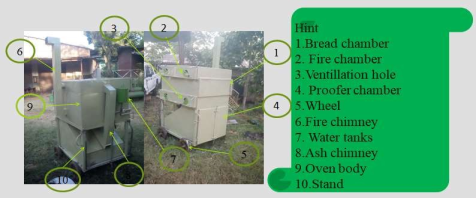
Figure 1. View of the Portable Wood Powered Bread Baking Oven Components.
Hint; 1, Bread door 2, oven body 3, steam/proofer chamber 4, Transportation wheel 5, Ventilation hole 6, support frame 7, Ash chimney 8, Water Tankers and their connector pipes with gate valves 9, Fire chimney and 10, Fire door.
2.6. Experimental Setup
Tests were conducted using four different local biomass fuels, such as eucalyptus (local name bargamo), wadessa, Gatira, and Gravilia, with a 50 cm length and having different diameters and weights individually but equal weight for each batch, and split into usable sizes for ease of ignition. Real-time temperature data was acquired by type K thermocouples installed in both top and bottom chambers and the bread chamber. The test includes the measurement of fuel wood consumed for each test. The tests were pre-weighed, and the quantities of the same weight of fuel wood for both fire chambers (5 by 5 kg of fuel wood) and 10 kg of flour were put aside for every experiment conducted. A batch of firewood and flour was set aside and weighed before each test of the process.
Thermocouple
Three K-type thermocouples were installed in the top and bottom fire chamber and baking chamber compartments for measuring the temperature values during the baking operation.
2.7. Dough Preparation
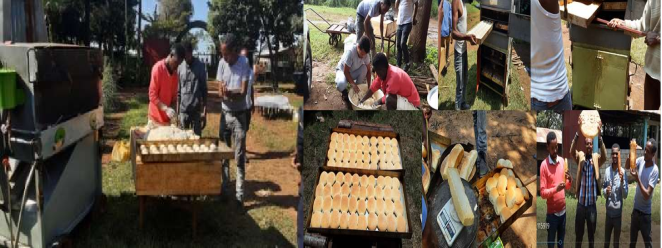
The bread dough was prepared by mixing 10 kg of flour, 100 g of salt, 70 g of dry yeast, 6 liters of water, 70 g of margarine, 70 g of baking powder, and 100 g of sugar. The dough was mixed manually by finger infringement into a mixing bowl or vessel for 10 to 15 minutes until a consistent dough character was achieved. The dough was then placed on a flat table and divided into the required weight and kneaded into a ball shape. The kneaded dough was divided and weighed on a digital mass balance into 100, 500, and 2000 g as one set. Three sets were made in four replications, then molded and placed inside clean and oiled baking pans of four different sizes to develop a moist surface, and their physical dimensions were measured and recorded as average diameter, length, width, and height. A set of three different sizes of molded dough was placed inside a proofer for 30 min to 1 hr at 25°C to 40°C. During the proofing process, alcohol is produced with carbon dioxide due to the fermentation of sugar content by the yeast. This resulted in the dough rising to almost double its height. After the proofing process, they were transferred and properly arranged on the baking tray, then loaded inside the oven and baked for 20 to 25 minutes at different temperatures because these procedures were repeated, and the changes were observed for other sets of molded dough at baking temperatures consecutively. The temperature was recorded at an interval of 5 minutes for the bread chamber to see the effective baking time and the average temperature required to bake the dough and avoid overcooking, which leads to bread burning, and at an interval of 10 minutes for both fire chambers to see the oven temperature rise and drop.
Figure 2. Dough and Bread Preparation Profile with 3 Different Bread Trays.
2.7.1. Bread
Bread is composed of crust and crumb, the proportions of which depend on the conditions in the oven. A crumb has a porous structure; it consists of a monomolecular lipid with a few polymerized protein units of high molecular weight dispersed within it. The walls of the pores are composed of dried gelatinized starch . The curvature of pores has three functional aspects that affect: 1. the structure of the bread. 2. The mechanism of heat transfer, particularly the evaporation and condensation of water vapor through/within the pore system. 3. The adsorption of the flavor compounds formed during baking. The volume of each bread was significantly different due to its expansion and space coverage.
2.7.2. Fuel Materials
Tests were conducted using four different local biomass fuel such as Eucalyptus grands, Wadessa, Gatira and Gravilia with a 50cm length and having different diameter and weight individually, but equal length. Equal weight of wood was set aside for each per batch and splited into usable size for ease ignition.
The test includes measurement of fuel-wood consumed for each tests were pre-weighed and the quantities of the same weight of fuel-wood for both fire chamber (5 by 5 kg of fuel wood) and 10 kg of flour were put a side for every experiments conducted. A batch of firewood and flour was set aside and weighed before for each test of process.
2.7.3. Temperature
The baking temperature dominates the quality of the product during baking . The increased temperature creates a pressure gradient in the product, causing the lattice of the gluten threads to dilate from the center of the loaf outwards, i.e., towards the surface. Real-time temperature data was acquired by type K thermocouples installed in both the top and bottom chambers and the bread chamber.
2.7.4. Insulation
The main objective of insulation is to reduce the amount of heat escaping from the oven to the atmosphere. In order to work effectively, the insulation material must have a low thermal conductivity. Insulations are used to decrease heat flow and surface temperatures.
2.8. Data Collected
The data collected during experimental evaluation were temperature, time taken for baking bread, fuel wood moisture content, weight of bread before and after baking, weight of biomass before and after oven drying, heat loss and gain during operation, etc.
2.9. Data Analysis
All the collected data were analyzed using Stat 8 SAS statistical software version and R-Software (Rx64 4.1.0). The treatments were subjected to a randomized complete block design for their significance using calculated least significant difference (LSD) values at a 5% level of probability.
3. Results and Discussion
A prototype of a wood-powered bread-baking oven was fabricated and constructed for baking purposes. The wood-powered bread-baking oven is a compact type of oven that uses the three modes of heat transfer (conduction, convection, and radiation) to bake food products. During the baking process, the initial bread dough of white color changed to varying degrees of brownness as the baking temperature increased. The final product had an outer layer that was a semi-rigid, less fragile structure called the crust layer, while the inner part of the dough had a crumb texture.
Heat and mass transfers to the bread chamber and bread through several mechanisms, such as convection, radiation, conduction from heat sources to the baking chamber, and evaporation and condensation of steam, occur in the baking compartments.
3.1. Performance Evaluation
Performance evaluation was carried out to determine the functionality and performance characteristics of the wood-powered or wood-fired bread-baking oven. The performance evaluation characteristics were carried out to establish the optimum baking capacity and baking efficiency. The performance of a wood-fired bakery oven (WFBO) depends, to a large extent, upon the efficiency of the way in which energy is converted. Such a system includes the conversion of chemical energy in the fuel to thermal energy and the efficiency with which the thermal energy is transferred to the baking chamber. The system for transporting combustion products through a WFBO and the types of material used in the construction of the oven are important parameters that impact its overall performance.
3.2. Baking Capacity
The wood-powered/fired bread baking oven has two baking compartments; in each compartment, a total of 160, 32, and 8 pieces of bread dough were baked per batch in baking pans of size 985 mm × 390 mm × 60 mm, 300 mm × 100 mm × 100 mm, and Ø400 mm × 100 mm for small, medium, and large loaves of bread, respectively. The baking chamber of the fabricated wood-powered/fired bread baking oven (WPBBO) has a volume of 2.61410⁻⁴ m³, 2.9210⁻³ m³, and 1.082*10⁻² m³, respectively. Therefore, the WPBBO has a maximum baking capacity of 30 kg/hr, producing 480, 96, and 24 pieces per hour for each dough mass of 100 g, 500 g, and 2000 g per batch of operation, respectively.
3.3. Baking Efficiency
The study results reveals that the baking efficiency for wood-fired and gas-fired at the three selected temperature levels which best confirm with 5, 8, 17] results. It was observed that baking efficiencies increased as the baking temperature increased, which is highly in agreement with the study reports of , 5, 17] study reports. The optimum baking efficiency of the oven occurred at the 229°C baking temperature, which reveals that the study result agrees with , 5, 8] results, and most especially when the weight of dough was increased to 2000 g. This is due to the increase in the surface area of the bread dough to absorb maximum thermal energy dissipated from the heat exchangers. The baking efficiencies increased relatively with an increase in the baking temperatures. This study is also in agreement and reveals that the baking efficiency of the WPBBO was determined by using the ratio of the designed baking time to the actual baking time required to bake a batch of dough to its desired taste, color, and texture with a rotary oven, as calculated in .
3.4. Heat Loss in the Oven
The heat loss from the oven to the environment was estimated as negligible because the WPBBO wall was totally insulated by high thermal insulation material of aluminum-reinforced Fiberglas and assumed an adiabatically insulated boundary condition except via the chimney and air ventilation hole provided on the fire door, which was of minimal and natural type and uncontrolled.
3.5. Weight Loss in the Baked Bread
According to , the weight loss in the food samples (bread dough) was calculated by subtracting the weight of the food sample after baking (heating) from the initial weight of the food sample. The moisture loss in baked bread is minimal. Therefore, the average weight losses or moisture for each of the three different weights of bread dough of 100 g, 500 g, and 2000 g were 15.867%, 6.24%, and 6.3828%, respectively. Table 1. Physical properties of unbaked dough for different dough weights.
Table 1. Physical Properties of Unbaked Dough for Different Dough Weight (gm).

Bread

weight of Un-baked Dough (g)

Surface Area (cm2)

Volume (cm3)

Density (g/cm3)

Specific Volume (cm3/g)

Small

100c

4.54c

16.25c

6.1939a

0.1625c

medium

500b

156.475b

707.043b

0.7323c

1.4141a

Large

2000a

4897.007a

1913.984a

1.0791b

0.957b

Mean

866.6667

2040.168

879.0919

2.668419

4.517556

LSd

5.352241e-13

1277.147

245.8837

0.3451783

3.429359

Cv

5.921161e-14

60.02

26.81753

12.4026

72.78346

Note: Means with the same letters in the same column are non-significant, whereas the others are highly significant. LSD = least significant difference, and CV = critical value for comparison.
Table 2. Physical Properties of Baked Dough (Baked Bread) and the Experimental Weight Losses of Bread During the Baking.

Bread

baked Dough (g)

Surface Area (cm2)

Volume (cm3)

Density (g/cm3)

Specific Volume (cm3/g)

MCwb

MCdb

%rise

Small

85.875c

27.34b

132.0821b

0.6638a

1.541a

14.125a

16.52a

74.29a

medium

472.875b

284.16b

2798.98b

0.1691b

5.92b

5.425b

5.745b

45.667b

Large

1869.875a

5809.00a

11363.486a

0.2192b

6.0926a

6.50625b

6.692b

28.07c

Mean

9.0125

879.0919

0.350667

0.845

8.685417

9.742097

9.742097

49.34435

lSd

0.07161181

245.8837

0.07598837

0.2083505

1.42723

1.958048

1.958048

6.750833

Cv

0.7618381

26.81753

20.77665

23.65405

15.75529

19.27056

19.27056

13.11726

Note: means with the same letters in the same column are non-significant, whereas the others are highly significant. LSD = least significant difference, Cv = critical value for comparison, MCwb = wet base moisture content of baked bread, MCdb = dry base moisture content of baked bread, and % rise = percentage of baked bread rise in volume.
Tables 1 and 2 showed that the wood-powered bread-baking oven showed a significant difference for p<0.05, and the moisture and weight dropped by 12.06% and 9.74 g, which was a minimal moisture and weight loss according to study report reveals that, 12.2% and 12.5 g, respectively, for the gas-fired oven. This result showed that the oven was very effective and efficient relatively. The baked bread's surface area, volume, and specific volume were increased, whereas its density decreased after baking, and the results showed that the wood-powered bread baking oven constructed was effective and performed well.
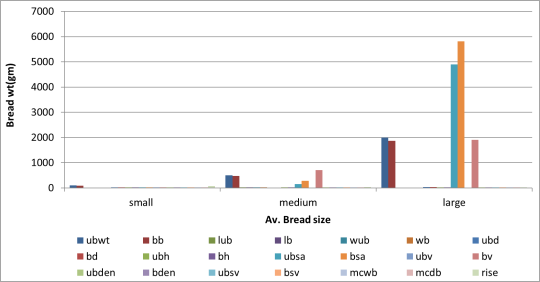
Figure 3. Graph of Physical Properties of Un Baked Dough and Baked Bread.
The graph of physical properties of unbaked dough and baked bread showed that there was a significant difference between unbaked and baked bread in terms of its weight and size, or volume.
3.6. Biomass Fuel Energy Efficiency and Moisture Content
Parameters of the biomass fuel selection for fire. Wood was alive and fresh; it consists primarily of water, i.e., most of the weight was actually water. After being cut to length and stacked for a year or two, the average moisture content generally drops to approximately 20% . In the combustion process, water is evaporated, and the temperature is raised to the fuel gas temperature. Dry wood has approximate combustion values of 16300 kJ/kg and 3890 kcal/kg. For 20% air-dried wood, it has a usable energy of 97% by volume and 81% energy per weight. Accordingly, we have got the combustion value of 17,447.98 watts.
3.7. Weight Loss During Drying
During drying, paddy wood loses its weight due to loss of moisture. The moisture contents for four different locally available biomasses were found by weighing each sample before and after they were placed in the oven for a 72 h period at 65°C. The ash content was determined to obtain their moisture by examining four differences in the weight of the samples after combustion in a wood-powered bread oven for 3-4 h. The densities were based on the volume and weight measurements of the samples. The volume was determined using a known amount of fine sand. The amount of wood used was determined by weight.
3.8. Wood Thermal Efficiency
The system thermal efficiency was the ratio of net useful energy utilized to the gross energy supply and was found to be 96.6% at an average air-dry weight of 12.652%, and this study result was highly consistent with 97% for 20% air-dried tree wood reported by . The experimental results (Table 3 below) showed that locally available biomasses used, such as eucalyptus and wadessa, have better thermal efficiency than gatira and gravilia. However, gatira and gravilia have higher air and oven dry weights than eucalyptus and wadessa, and their thermal efficiencies and heating times were lower than eucalyptus and wadessa, which lasted up to 4:30-5:00 and 4:00-4:30 with the same weight of Wood samples are loaded for each batch of the baking operation. However, wadesa was not recommended for firewood since it was too costly, as it was needed for other purposes than firing, and therefore eucalyptus was the best fuel wood since it was also being cultivated as a cash crop tree next to jima (chat) and can be easily affordable everywhere at any time at no or low cost at the community level. It was sold by batch, even on the roadside, in suburban and urban areas too.
Table 3. Weight of Fire Wood Different Biomasses for Fuel Sources.

wood type

Air dry wt(g)

Oven dry wt(g)

MCwb (%)

MCdb (%)

Eucalyptus

428.60b

370.40b

13.699a

16.08a

Gatira

514.70a

449.2a

12.718a

14.724a

Wadessa

316.50c

279.80c

11.562a

13.082a

Gravilia

449.20ab

391.30ab

12.627a

14.705a

Mean

427.25

372.68

12.652

14.632

Lsd

79.126

68.604

2.9686

3.8831

cv

20.18

20.06

25.57

28.92

Note: means with the same letters in the same column are non-significant, whereas the others are highly significant. LSD = least significant difference, CV = critical value for comparison, MCwb = wet base moisture content of firewood, MCdb = dry base moisture content of firewood, and wt = weight in (g) of firewood biomasses weighed air dry before taking to the laboratory for oven-dry moisture content determination and after for 72hrs at 65°C.
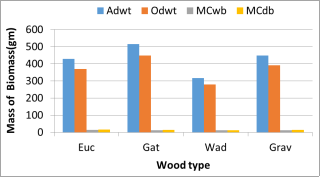
Figure 4. Different Biomass Fuel Wood Weight for Combustion and Their Moisture Content Determination.
Tests were conducted using four different local biomass fuels, such as Eucalyptus grandis, Wadessa, Gatira, and Gravilia, with a 50 cm length and having different diameters and weights individually, but equal weights for each batch, and split into usable sizes for ease of ignition. Real-time temperature data was acquired by type K thermocouples installed in both top and bottom chambers and the bread chamber. The test includes the measurement of fuel wood consumed for each test. They were pre-weighed, and the quantities of the same weight of fuel wood for both fire chambers (5 by 5 kg of fuel wood) and 10 kg of flour were put aside for every experiment conducted. A batch of firewood and flour was set aside and weighed before each test of the process.
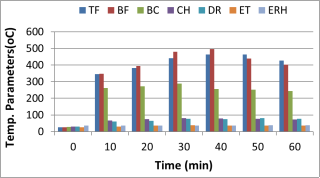
3.9. Baking Process Temperature Profile
The oven baking process temperature profile is another important indicator of the energy consumption behavior of the equipment (bread dough). The temperature profile of the bread oven (WPBBO) showed that as the baking temperature increased, the baking time decreased. This result shows that the oven performs well above 140°C but is more efficient at an average baking temperature of 229°C.
Table 4. Average Temperature Recorded at an Interval of 10minute Difference.

Trt (time. min)

TF(oC)

BF(oC)

BC(oC)

Ch(oC)

DR(oC)

ET(oC)

ERH (%)

0

26.40b

26.77e

28.9c

29.925b

30.650c

25.325a

36.50a

10

345.22a

347.80d

262.63ab

67.225a

60.225b

29.85a

36.0a

20

381.50a

393.50cd

272.18ab

74.80a

65.675b

35.825a

36.0a

30

440.90a

479.50ab

288.05a

81.70a

77.30a

38.075a

35.50a

40

463.65a

495.73a

256.92ab

79.0a

75.325a

37.15a

37.0a

50

463.10a

438.27abc

251.72ab

76.075a

81.0a

36.35a

37.50a

60

427.80a

403.23bcd

243.63b

73.125a

76.70a

35.30a

37.50a

Mean

364.08

369.26

229.15

68.836

66.696

33.982

36.571

LSD (5%)

119.69

81.039

39.586

16.901

9.0766

14.022

3.4764

Cv (%)

22.12

14.77

11.63

16.53

9.16

27.78

6.40

Note: means with the same letters in the same column are non-significant, whereas the others are significant and highly significant, respectively. LSD lists a significant difference, CV = critical value for comparison, TF = top fire chamber temperature, BF = bottom fire chamber temperature, BC = bread chamber temperature, CH = chimney temperature, DR = door temperature, ET = environmental temperature, and ERH = environmental relative humidity, and it was determined in two conditions: with no load and with full load conditions.
Figure 5. Baked Bread Temperature Profile for Three Different Dough Weights.

4. Conclusions
The portable wood-powered bread-baking oven was designed, constructed, and evaluated using three different weights of bread dough of the same recipe. The dough was baked at an average temperature of 229.15°C. It was observed during this experiment that baking temperature and baking period influence the rate of weight loss during the baking process. The adapted biomass oven performs very well, and it is amazing to develop such an energy-efficient, less fuel-consuming, comfortable, low-cost, environmentally friendly, and highly thermally efficient oven. With a very small quantity of wood, bread can be baked in a short time. What is even more interesting is that it does not depend on electricity or other fuel for heat supply. The wood provides the heat supply, and it is readily available at a cheap rate. The performance evaluation of the oven showed that the oven is efficient, with a baking efficiency and baking capacity of 86.9% and 96.6%, respectively, at a baking period of 15-25 minutes, which is 20-30 kg h⁻¹, for small, medium, and large bread baked, respectively.
5. Recommendation
This oven is a very important piece for small-scale farmers, governmentally organized youth, and small-scale businesses. The oven has a combination of efficiency and availability of raw materials for construction as well as evaluation. The oven can be used in all rural, peri-urban, and urban settlements. This oven has a large advantage because of power instability and shortages over large areas of our rural society in Ethiopia and Oromia, too, and it operates for a longer time with a minimum of biomass for fuel and operates with any type of air-dried biomass as fuel sources. The federal and state governments should assist in the mass production of this oven for the end users. It improves bakeries and reduces their wood use, which in turn improves the situation for bakery owners. Reduces wood use, which reduces deforestation and therefore also reduces CO₂ emissions. Reduces local air pollution because of reduced wood use and better combustion efficiency, which is eco-friendly.
Abbreviations

ABT

Actual Baking Time

BAERC

Bako Agricultural Engineering Research Centre

BC

Baking Chamber

BCH

Baking Chamber Height

BCL

Baking Chamber Length

BCW

Baking Chamber Width

BE

Baking Efficiency

BF

Baking Fluid

BT

Baking Time

CH

Combustion Chambers

CO

Oven Capacity

CV

Critical Value for Comparison

DBT

Designed Baking Time

LSD

Least Significant Difference

MC

Moisture Content

MCdb

Dry Base Moisture Content

MCwb

Wet Base Moisture Content

MD

Mass of Dough

MJ

Mega Joule

Cp

Specific Heating Capacity

QcondBF

Heat Conducted Bottom Fire Chamber

QcondTF

Heat Conducted Top Fire Chamber

TF

Top Fire Chamber

TRM

Root Mean Temperature

WFBO

Wood-fired Bakery Oven

WI

Initial Weight

WPBBO

Wood-powered Bread-baking Oven

Author Contributions
Usman Kedir Geda: Conceptualization, Data curation, Formal Analysis, Funding acquisition, Investigation, Methodology, Project administration, Resources, Software, Supervision, Validation, Visualization, Writing – original draft, Writing – review & editing
Abdo Hussein Washi: Data curation, Resources, Supervision, Visualization
Gemechis Mideksa Adugna: Data curation, Methodology, Software, Supervision, Visualization
Conflicts of Interest
The authors declare no conflicts of interest.
References
[1] B. G. Tucho, H. F. Etefa, V. Kumar, G. Amante, M. T. Efa, and F. B. Dejene, “Effect of wood moisture content on the performance of wood burning cook stoves,” Int. J. Sustain. Eng., vol. 16, no. 1, pp. 1–10, 2023,
[2] B. Olufemi, “Fabrication and Performance Evaluation of Designed Multipurpose Domestic Gas Baking Oven,” vol. 4480, no. 2, pp. 47–52, 2019,
[3] E. I. Awode, J. Abutu, and H. Garkuwa, “Performance Assessment of Dual-Powered Baking Oven Developed from Locally Sourced Materials,” J. Adv. Ind. Technol. Appl., vol. 4, no. 1, pp. 38–45, 2023,
[4] J. L. Chukwuneke, I. C. Nwuzor, E. O. Anisiji, and I. E. Digitemie, “Design and Fabrication of a Dual Powered Baking Oven,” vol. 16, no. 4, pp. 1–8, 2018,
[5] B. S. Kosemani, A. T. Ilori, and A. O. Atere, “Modification and Optimization of a Baking Oven for Small Scale Bread Production,” Agric. Sci., vol. 12, no. 06, pp. 630–644, 2021,
[6] H. L. Silva, R. L. Monteiro, A. A. Salvador, B. Laurindo, B. Augusto, and M. Carciofi, “Kinetics of bread physical properties in baking depending on actual finely controlled temperature,” vol. 137, no. February, pp. 0–9, 2022,
[7] A. O.. and S. O. Adegbola A. A., Adogbeji O. V, “DESIGN, CONSTRUCTION AND PERFORMANCE,” Innov. Syst. Des. Eng., vol. 3, no. 11, 2012.
[8] M. S. Sanusi, M. O. Sunmonu, A. L. Adepoju, T. O. Abodunrin, and H. A. Ajibade, “Development and evaluation of the operational parameters of a rotary oven,” Niger. J. Technol. Dev., vol. 17, no. 4, pp. 239–249, 2020,
[9] D. and U. K. Tesfaye, “Evaluation and Verification of Small-scale Portable Biomass Bread Baking Oven,” vol. 11, no. 2, pp. 26–31, 2025.
[10] M. O. J. R. Heil, “Mathematical modeling of transien theat and mass transport in a baking biscuit.,” 1994.
[11] E. G. Khater and A. H. Bahnasawy, “Bioprocessing & Biotechniques,” vol. 4, no. 7, 2014,
[12] S. Kofi, O. Kwabena, B. Addai, and M. Anto, “Comparative Analysis of Different Burner Concepts in a Locally Manufactured Bread-Baking Oven,” Int. J. Energy Power Eng., vol. 13, no. 3, pp. 42–51, 2024,
[13] Z. Khatir, A. R. Taherkhani, J. Paton, and N. Kapur, “This is a repository copy of Energy thermal management in commercial bread-baking using a multi-objective optimisation framework. White Rose Research Online URL for this paper : Version : Accepted Version Article : Khatir, Z, Taherkhani, AR, Paton,,” 2015.
[14] A. T. Morakinyo, B. Omidiji, and H. Owolabi, “Development and optimization of operational parameters of a gas-fired baking oven,” no. 31, pp. 45–64, 2017.
[15] G. Tefera, “Evaluation of Impact Hammer Mill for Limestone Crushing for Acidic Soil,” vol. 6, no. 2, pp. 27–32, 2021,
[16] F. A. Manhiça, Efficiency of a Wood-Fired Bakery Oven – Improvement by Theoretical and Practical Department of Chemical and Biological Engineering Efficiency of a Wood-Fired Bakery Oven – Improvement by Theoretical and Practical FABIÃO ARMANDO MANHIÇA © FABIÃO. 2014.
[17] A. Adedeji, “Design and Fabrication and Evaluation of a Dual Powered Baking Oven for Smoking Fishes at CEDAP Village (A 2021/2022 TETFUND IBR PROJECT),” Ind. Eng. Lett., vol. 13, no. 1, pp. 1–12, 2023,
[18] J. P. Holman, Heat Transfer Tenth Edition. 2023.
[19] M. A. B. Yunus A. Cengel, fifth edition, Thermodynamics An Engineering Approach. 2005.
[20] P. J. and J. C. L. PRITCHARD, Fox and McDonald’s INTRODUCTION TO FLUID MECHANICS EIGHTH EDITION. 2004.
[21] E. R. K. RAJPUT and M. E., A Textbook of Heat and Mass Transfer (SI Units) A. 2018.
[22] D. M. Kulla, I. M. Ebekpa, and M. Sumaila, “Design and Construction of A Small Scale Charcoal Baking Oven,” vol. 2, no. 6, pp. 89–94, 2014.
[23] A. S. Akinwonmi, “Design and Fabrication of a Novel Commercial Baking Oven,” Am. J. Mech. Mater. Eng. Res., vol. 8, no. 3, pp. 39–46, 2024,
[24] G. M. SANI, “DESIGN, CONSTRUCTION AND TESTING OF A CHARCOAL FIRED CRUCIBLE FURNACE FOR MELTING OF 10KG OF ALUMINIUM,” MSc/ Eng, no. 10752, pp. 2008–2009, 2015.
[25] I. S. Asibeluo, P. E. Okeri, C. Onwurah, and M. Adiogba, “Entrepreneurial Skill Development : A Case Study Of The Design And Construction Of Charcoal Baking Oven,” vol. 5013, no. 4, pp. 592–595, 2015.
[26] M. Shivapour, S. Yousefi, S. M. Seyedain Ardabili, and W. Weisany, “Optimization and quality attributes of novel toast breads developed based on the antistaling watermelon rind powder,” J. Agric. Food Res., vol. 2, no. June, 2020,
[27] E. ToolBox, “Wood and Bio Mass Heat,” 2003.
[28] N. Therdthai, W. Zhou, and T. Adamczak, “Simulation of starch gelatinisation during baking in a travelling-tray oven by integrating a three-dimensional CFD model with a kinetic model,” vol. 65, pp. 543–550, 2004,
[29] G. Ifeanyi, O. Faith, and C. Ugwu, “Production and evaluation of cold extruded and baked ready-to- eat snacks from blends of breadfruit (Treculia africana), cashewnut (Anacardium occidentale) and coconut (Cocos nucifera),” vol. 23, pp. 65–77, 2014.
Cite This Article
  • APA Style

    Geda, U. K., Washi, A. H., Adugna, G. M. (2025). Renewable and Sustainable Energy Engineering Technologies, Adaptation and Evaluation of Small Scale Portable Wood Powered Bread Baking Oven. International Journal of Food Science and Biotechnology, 10(4), 98-111. https://doi.org/10.11648/j.ijfsb.20251004.13

    Copy | Download

    ACS Style

    Geda, U. K.; Washi, A. H.; Adugna, G. M. Renewable and Sustainable Energy Engineering Technologies, Adaptation and Evaluation of Small Scale Portable Wood Powered Bread Baking Oven. Int. J. Food Sci. Biotechnol. 2025, 10(4), 98-111. doi: 10.11648/j.ijfsb.20251004.13

    Copy | Download

    AMA Style

    Geda UK, Washi AH, Adugna GM. Renewable and Sustainable Energy Engineering Technologies, Adaptation and Evaluation of Small Scale Portable Wood Powered Bread Baking Oven. Int J Food Sci Biotechnol. 2025;10(4):98-111. doi: 10.11648/j.ijfsb.20251004.13

    Copy | Download

  • @article{10.11648/j.ijfsb.20251004.13,
      author = {Usman Kedir Geda and Abdo Hussein Washi and Gemechis Mideksa Adugna},
      title = {Renewable and Sustainable Energy Engineering Technologies, Adaptation and Evaluation of Small Scale Portable Wood Powered Bread Baking Oven},
      journal = {International Journal of Food Science and Biotechnology},
      volume = {10},
      number = {4},
      pages = {98-111},
      doi = {10.11648/j.ijfsb.20251004.13},
      url = {https://doi.org/10.11648/j.ijfsb.20251004.13},
      eprint = {https://article.sciencepublishinggroup.com/pdf/10.11648.j.ijfsb.20251004.13},
      abstract = {Bread is a staple food that is closely connected to people's daily lives, and the process of making bread is a significant part of food production. Baking is the last and most critical stage in bread-making, where dough typically made from flour, water, and leavening agents is transformed into a food item with unique taste and texture through the application of heat in an oven. In Ethiopia, most bakers are located in towns and use either traditional wood-fired ovens made from mud bricks or imported modern ovens. These ovens are often criticized for their high wood usage and high cost, making them unsuitable for small-scale or household use. To address this, this study aimed to adapt and assess a small-scale, portable, wood-powered bread-baking oven (WPBBO). The oven, which has two baking compartments with one baking chamber and two combustion chambers, was evaluated based on its baking capacity, efficiency, and the weight loss of the bread produced. When fully loaded, it can bake 160, 32, and 8 loaves of bread in each batch across the two compartments, with a baking efficiency of 86.9% and a baking capacity of 96.6%, along with an average weight loss of 12.6%. The oven's performance in terms of baking time was tested for 100 g, 500 g, and 2000 g loaves of bread, showing an average baking time between 15 - 25 minutes. A single feeding of 5 kg of biomass fuel into each fire chamber was sufficient for a 25-minute baking cycle. The study concluded that the oven performs well within a 15-20 minute range for a standard bread loaf. Based on this evaluation, the wood-powered oven is recommended for use in domestic settings and small-scale businesses, as it is suitable for rural areas where electricity is not available, as well as in pre-urban and urban communities.},
     year = {2025}
    }
    

    Copy | Download

  • TY  - JOUR
    T1  - Renewable and Sustainable Energy Engineering Technologies, Adaptation and Evaluation of Small Scale Portable Wood Powered Bread Baking Oven
    AU  - Usman Kedir Geda
    AU  - Abdo Hussein Washi
    AU  - Gemechis Mideksa Adugna
    Y1  - 2025/12/29
    PY  - 2025
    N1  - https://doi.org/10.11648/j.ijfsb.20251004.13
    DO  - 10.11648/j.ijfsb.20251004.13
    T2  - International Journal of Food Science and Biotechnology
    JF  - International Journal of Food Science and Biotechnology
    JO  - International Journal of Food Science and Biotechnology
    SP  - 98
    EP  - 111
    PB  - Science Publishing Group
    SN  - 2578-9643
    UR  - https://doi.org/10.11648/j.ijfsb.20251004.13
    AB  - Bread is a staple food that is closely connected to people's daily lives, and the process of making bread is a significant part of food production. Baking is the last and most critical stage in bread-making, where dough typically made from flour, water, and leavening agents is transformed into a food item with unique taste and texture through the application of heat in an oven. In Ethiopia, most bakers are located in towns and use either traditional wood-fired ovens made from mud bricks or imported modern ovens. These ovens are often criticized for their high wood usage and high cost, making them unsuitable for small-scale or household use. To address this, this study aimed to adapt and assess a small-scale, portable, wood-powered bread-baking oven (WPBBO). The oven, which has two baking compartments with one baking chamber and two combustion chambers, was evaluated based on its baking capacity, efficiency, and the weight loss of the bread produced. When fully loaded, it can bake 160, 32, and 8 loaves of bread in each batch across the two compartments, with a baking efficiency of 86.9% and a baking capacity of 96.6%, along with an average weight loss of 12.6%. The oven's performance in terms of baking time was tested for 100 g, 500 g, and 2000 g loaves of bread, showing an average baking time between 15 - 25 minutes. A single feeding of 5 kg of biomass fuel into each fire chamber was sufficient for a 25-minute baking cycle. The study concluded that the oven performs well within a 15-20 minute range for a standard bread loaf. Based on this evaluation, the wood-powered oven is recommended for use in domestic settings and small-scale businesses, as it is suitable for rural areas where electricity is not available, as well as in pre-urban and urban communities.
    VL  - 10
    IS  - 4
    ER  - 

    Copy | Download

Author Information
  • Abstract
  • Keywords
  • Document Sections

    1. 1. Introduction
    2. 2. Materials and Methods
    3. 3. Results and Discussion
    4. 4. Conclusions
    5. 5. Recommendation
    Show Full Outline
  • Abbreviations
  • Author Contributions
  • Conflicts of Interest
  • References
  • Cite This Article
  • Author Information